
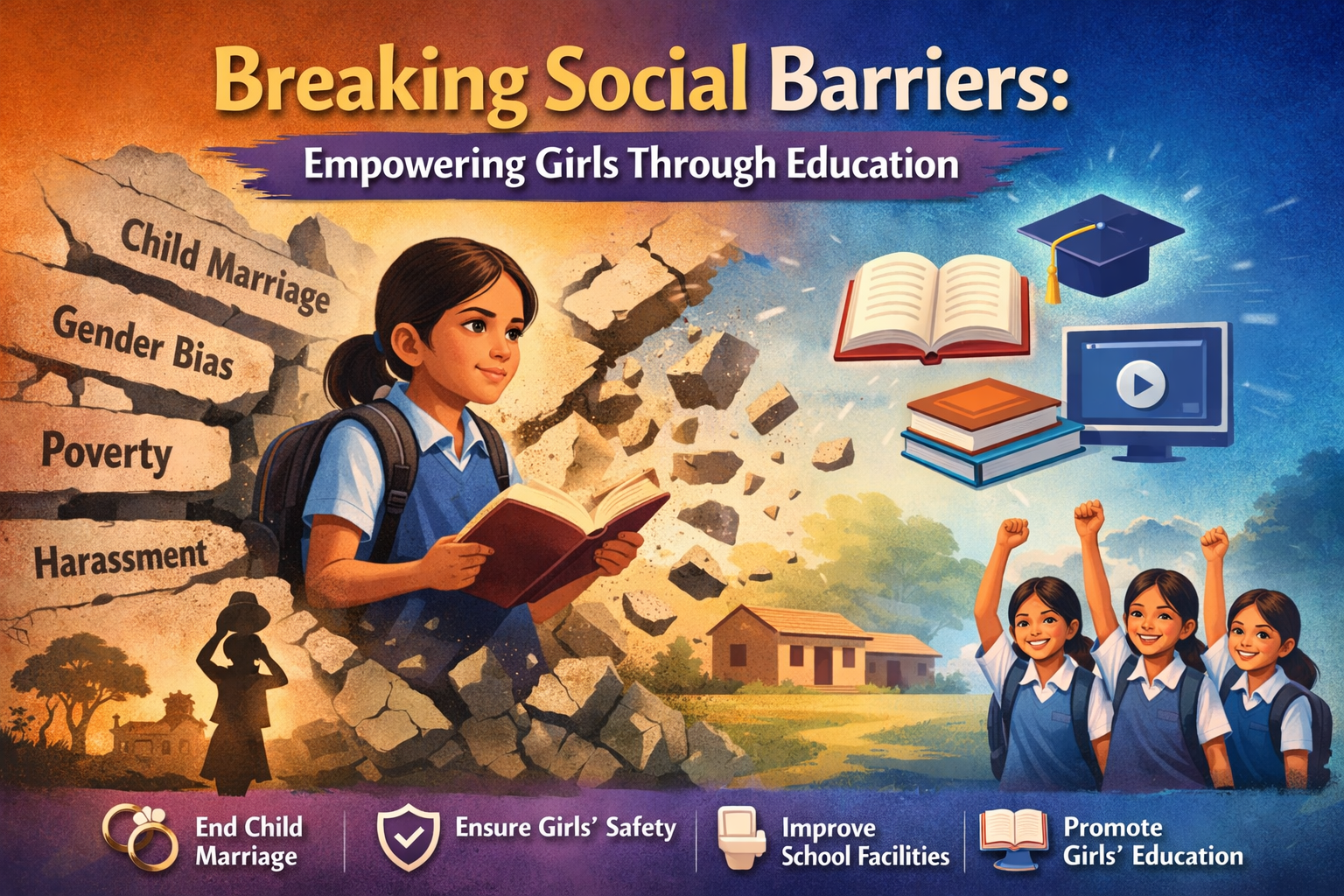
Across many regions of the world—particularly in developing countries like India—girls continue to face serious obstacles to completing their education. While financial hardship is a major concern, deeply ingrained social barriers often play an equally decisive role. These challenges are shaped by long-standing traditions, cultural expectations, and unequal social systems that restrict girls’ opportunities and potential. Understanding these barriers is the first step toward creating meaningful change.
What Do Social Barriers Mean for Girls’ Education?
Social barriers are the norms, beliefs, and behaviours within society that limit access to opportunities. For girls, these barriers frequently arise from rigid gender roles, concerns around safety, and prejudices that favour boys’ education over girls’. They can be overt—such as discouraging girls from pursuing higher studies—or subtle, like accepting early marriage as normal.
Common Social Challenges Faced by Girls in India
Gender Bias and Patriarchal Thinking
In many families, sons are viewed as future earners, while daughters are expected to manage household duties. This mindset results in fewer educational investments in girls and restricts their independence and aspirations.
Early Marriage and Pressure to Start Families
Child marriage remains a significant issue. Once married, girls are often expected to prioritise domestic responsibilities, making it extremely difficult—if not impossible—for them to continue their schooling.
Safety Concerns and Harassment
Fear for a girl’s safety during travel to school or within school premises leads many parents to withdraw their daughters from education, especially in rural or remote areas with limited transport and security.
Inadequate Sanitation Facilities
The lack of clean, private toilets in schools disproportionately affects girls. During menstruation, many are forced to stay home due to discomfort, embarrassment, or health concerns, increasing absenteeism and dropout rates.
Preference for Educating Boys
When resources are limited, families often choose to invest in sons’ education, believing it will bring greater financial returns, while daughters are expected to marry and move on.
Socioeconomic Factors That Intensify These Barriers
Poverty and Household Responsibilities
Economic strain often pushes girls into domestic work or income-generating activities, leaving little time or energy for school.
Low Awareness Among Parents
Parents with limited education themselves may not fully recognise the long-term benefits of educating girls, continuing a cycle of deprivation across generations.
Cultural Expectations About Women’s Roles
In many communities, girls are still primarily seen as future wives and mothers. Such beliefs discourage families from nurturing their academic ambitions.
Emotional and Psychological Effects on Girls
Constant exposure to discrimination and low expectations can deeply affect a girl’s confidence and motivation. Over time, this emotional burden may lead to disengagement from school and early dropouts, reinforcing inequality.
How Families and Communities Can Create Change
Progress begins within homes and neighbourhoods. When families understand the lifelong benefits of educating girls, attitudes start to shift. Community leaders, teachers, and local role models can inspire change by sharing success stories and challenging outdated norms.
Government and Policy Support
Initiatives such as Beti Bachao, Beti Padhao, mid-day meal programmes, and free school supplies have helped improve enrollment. However, lasting impact depends on strong implementation, safe infrastructure, enforcement of laws against child marriage, and attention to menstrual hygiene and security.
How The Third Eye Foundation Is Addressing These Barriers
At The Third Eye Foundation, we strive to ensure that every girl has the chance to learn, grow, and lead a dignified life. Through our Poori Padhai, Desh Ki Bhalai campaign and community-based initiatives, we work to:
With the support of committed volunteers and partners, we have helped thousands of girls remain in school and overcome the social barriers that once stood in their way.
Conclusion
The social challenges that prevent girls from accessing education are complex and deeply rooted, but they are not insurmountable. When families, communities, governments, and organisations come together, real change becomes possible. Every educated girl strengthens not only her own future, but the future of the nation as a whole. Support girl child education—support The Third Eye Foundation.