
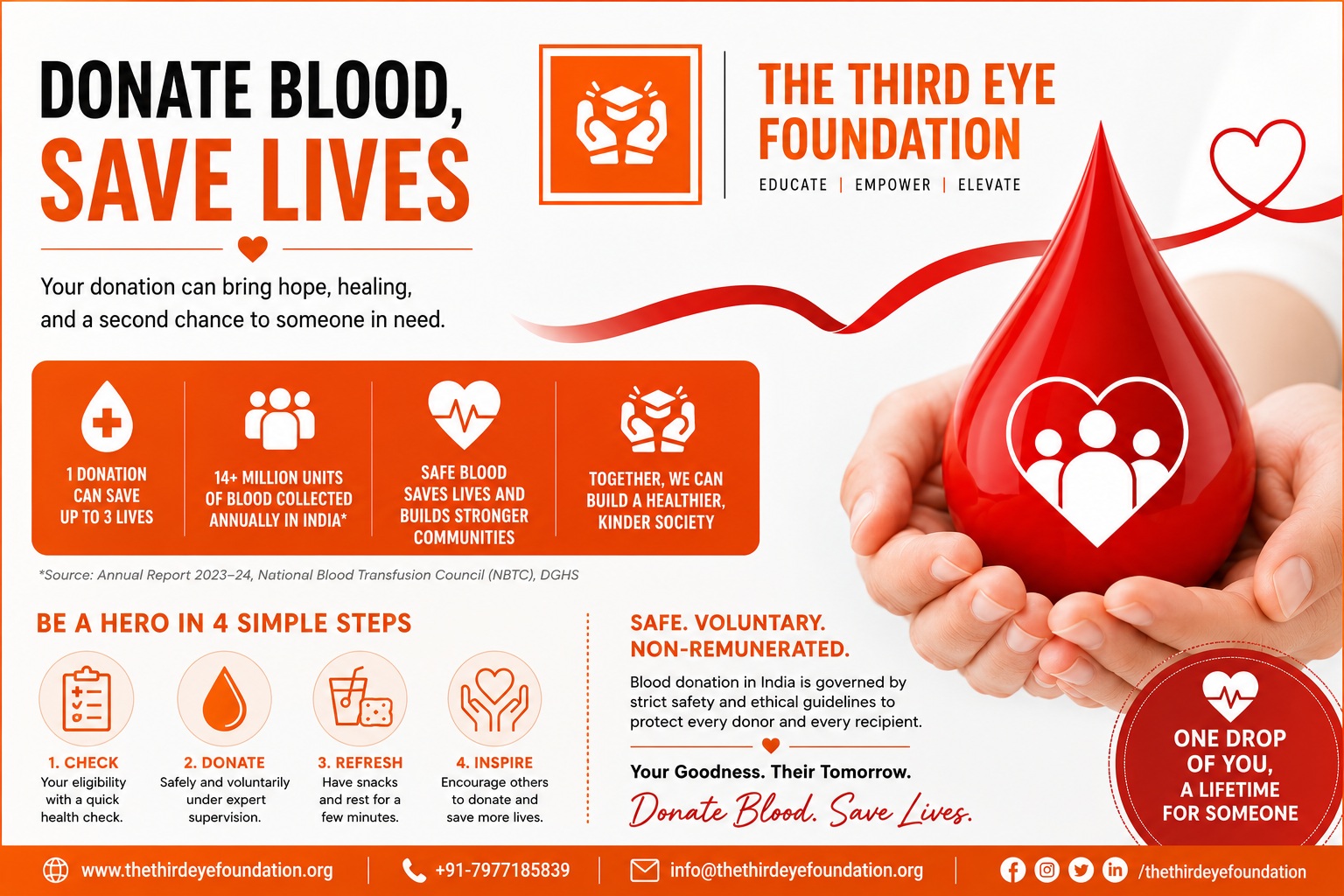

Blood donation is one of the most powerful acts of humanity. A single unit of blood can help save multiple lives - from accident victims and cancer patients to mothers during childbirth and children battling blood disorders. In India, where thousands of people require blood every day, voluntary donors continue to play a crucial role in strengthening healthcare and emergency response systems.
At The Third Eye Foundation, we believe that awareness is the first step toward action. Many people wish to donate blood but hesitate because they are unsure about the rules, safety measures, or eligibility criteria. Understanding the official guidelines can help remove fear and encourage more people to become regular voluntary donors.
The Government of India, through the Directorate General of Health Services (DGHS) and the National Blood Transfusion Council (NBTC), has established clear guidelines to ensure blood donation remains safe, ethical, and beneficial for both donors and recipients.
Why Blood Donation Matters More Than Ever
India requires millions of blood units every year to support surgeries, trauma care, cancer treatments, thalassemia patients, and emergency medical procedures. Despite significant progress in voluntary blood donation, shortages still occur in many rural and underserved regions.
According to recent national estimates, India collects more than 14 million units of blood annually. However, growing population demands, medical emergencies, and seasonal shortages continue to create pressure on blood banks across the country.
This is why awareness campaigns and community participation are essential. Every healthy individual who donates blood can become a silent hero for someone in need.
Who Is Eligible to Donate Blood in India?
To ensure donor safety and maintain healthy blood supplies, certain eligibility conditions are followed across licensed blood donation centers in India.
Basic Eligibility Criteria
You can usually donate blood if you meet the following conditions:
Before donation, every donor undergoes a brief health screening, medical questionnaire, and counseling session to ensure the process is completely safe.
How Frequently Can You Donate Blood?
Blood donation intervals are designed to allow the body enough time to recover naturally.
The human body quickly begins replacing plasma after donation, while red blood cells recover over the following weeks. Maintaining proper intervals protects donor health and ensures safe repeat donations.
Situations Where You Should Temporarily Avoid Donation
There are certain situations where individuals may need to postpone blood donation for a short period. These temporary deferrals help maintain both donor and recipient safety.
You may need to wait if you have recently experienced:
Most of these restrictions are temporary, which means many people can safely donate later once fully recovered.
Who Cannot Donate Blood Permanently?
To protect patients receiving blood transfusions, some medical conditions result in permanent ineligibility for blood donation.
These may include:
These rules are based on medical science and are designed to ensure maximum transfusion safety.
Safety Measures Followed During Blood Donation
Many first-time donors worry about safety, but blood donation in India follows strict medical standards.
Every donated blood unit is tested for major transfusion-transmissible infections, including:
Only sterile, single-use equipment is used during donation, making the process hygienic and safe. Licensed blood banks also maintain strict storage and transportation standards to preserve blood quality.
The Importance of Voluntary Blood Donation
India legally prohibits paid blood donation, promoting only voluntary and non-remunerated donations. This ethical system ensures safer blood supplies and encourages community responsibility.
At The Third Eye Foundation, we strongly support voluntary blood donation drives because every donor has the power to save lives without expecting anything in return.
A regular blood donor can help:
Blood Donation Myths That Need to End
Many people avoid donating blood because of myths and misinformation. In reality:
Awareness and education are key to increasing donor participation across India.
How You Can Support the Mission
Even if you are unable to donate blood immediately, you can still contribute by:
At The Third Eye Foundation, our mission is to build a more compassionate and healthier society where no patient suffers due to lack of blood availability. Through awareness campaigns, community outreach, and volunteer engagement, we aim to inspire more citizens to become regular blood donors and life savers.
Final Thoughts
Blood donation is not just a medical act - it is a humanitarian responsibility. The guidelines issued by Indian health authorities are designed to protect everyone involved while ensuring that safe blood reaches those who need it most.
A few minutes of your time can become someone’s second chance at life.
Donate blood. Spread awareness. Save lives. ❤️