
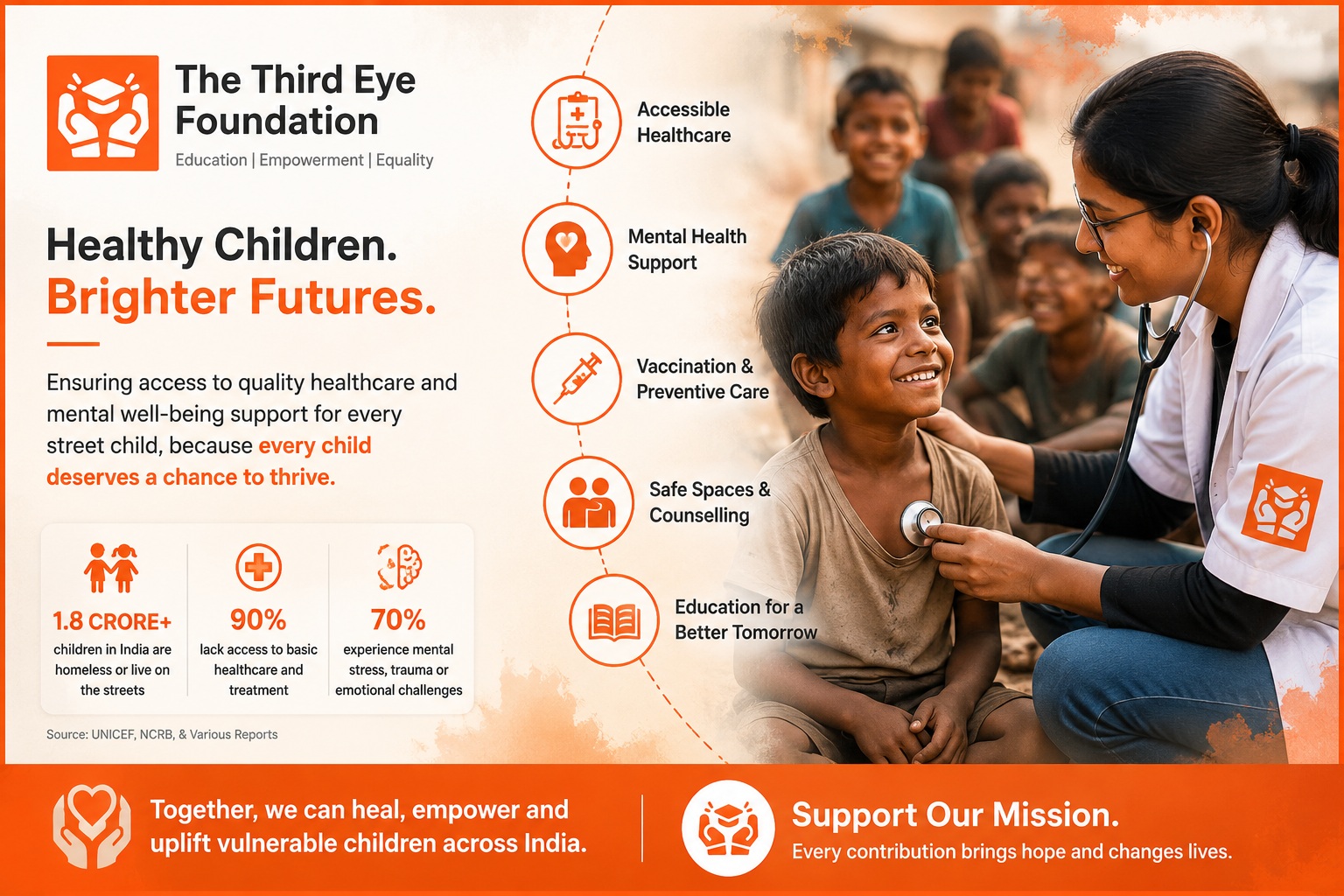

For most children, childhood is a time of learning, growth, and discovery. Unfortunately, for thousands of street-connected children across India, daily life is a struggle for survival. Living without stable shelter, proper nutrition, healthcare, or emotional support exposes these children to serious physical and mental health challenges that often go unnoticed.
At The Third Eye Foundation, we believe that every child deserves not only access to education but also the opportunity to grow up healthy, safe, and hopeful. Ensuring the well-being of vulnerable children is essential to helping them build brighter futures and break the cycle of poverty.
The Health Challenges Faced by Street Children
Children living on the streets are among the most vulnerable members of society. Constant exposure to harsh weather conditions, pollution, unsafe environments, and poor sanitation significantly increases their risk of illness and injury.
Many street children suffer from:
Without timely medical attention, minor health concerns can quickly become life-threatening. Sadly, many children are unable to access healthcare services because of financial barriers, lack of documentation, social stigma, or simply not knowing where to seek help.
The Often-Ignored Mental Health Crisis
While physical health challenges are visible, the emotional and psychological struggles faced by street children are frequently overlooked.
Many children living on the streets have experienced:
These experiences can leave lasting emotional scars. Children may suffer from anxiety, depression, low self-esteem, post-traumatic stress, and feelings of isolation. Without proper support, these mental health challenges can affect their education, relationships, decision-making abilities, and future opportunities.
A child who constantly worries about safety, food, or survival finds it difficult to focus on learning and personal development.
Why Accessible Healthcare Matters
Healthcare is a fundamental right, not a privilege. Every child deserves access to quality medical care regardless of their background or circumstances.
Creating child-friendly healthcare services can help:
Healthcare services must also be compassionate and non-judgmental. Street-connected children are more likely to seek help when they feel respected, understood, and safe.
Mobile Health Services: Bringing Care to Children
One of the most effective ways to reach vulnerable children is through mobile healthcare initiatives.
Mobile clinics can travel directly to locations where street children live or gather, including:
These services can provide:
By bringing healthcare directly to children, mobile clinics remove many of the barriers that prevent access to essential services.
The Importance of Community and NGO Partnerships
No single organisation can solve the challenges faced by street children alone. Sustainable change requires collaboration between healthcare providers, educational institutions, local communities, government agencies, and non-profit organisations.
NGOs play a crucial role by:
Strong partnerships help create a holistic support system that addresses both immediate needs and long-term development.
How The Third Eye Foundation Is Making a Difference
At The Third Eye Foundation, our mission is to create opportunities for underprivileged children through education, awareness, and community support. We recognize that a child cannot learn effectively when they are unwell, hungry, or emotionally distressed.
Through our initiatives, we strive to:
Every child deserves more than survival - they deserve the chance to thrive.
How You Can Help
Positive change begins with collective action. Whether through volunteering, spreading awareness, supporting child welfare programs, or making a donation, every contribution can help improve the lives of vulnerable children.
Together, we can ensure that street-connected children receive the healthcare, protection, and opportunities they need to build healthier and brighter futures.
Because every child deserves safety. Every child deserves dignity. And every child deserves hope.