
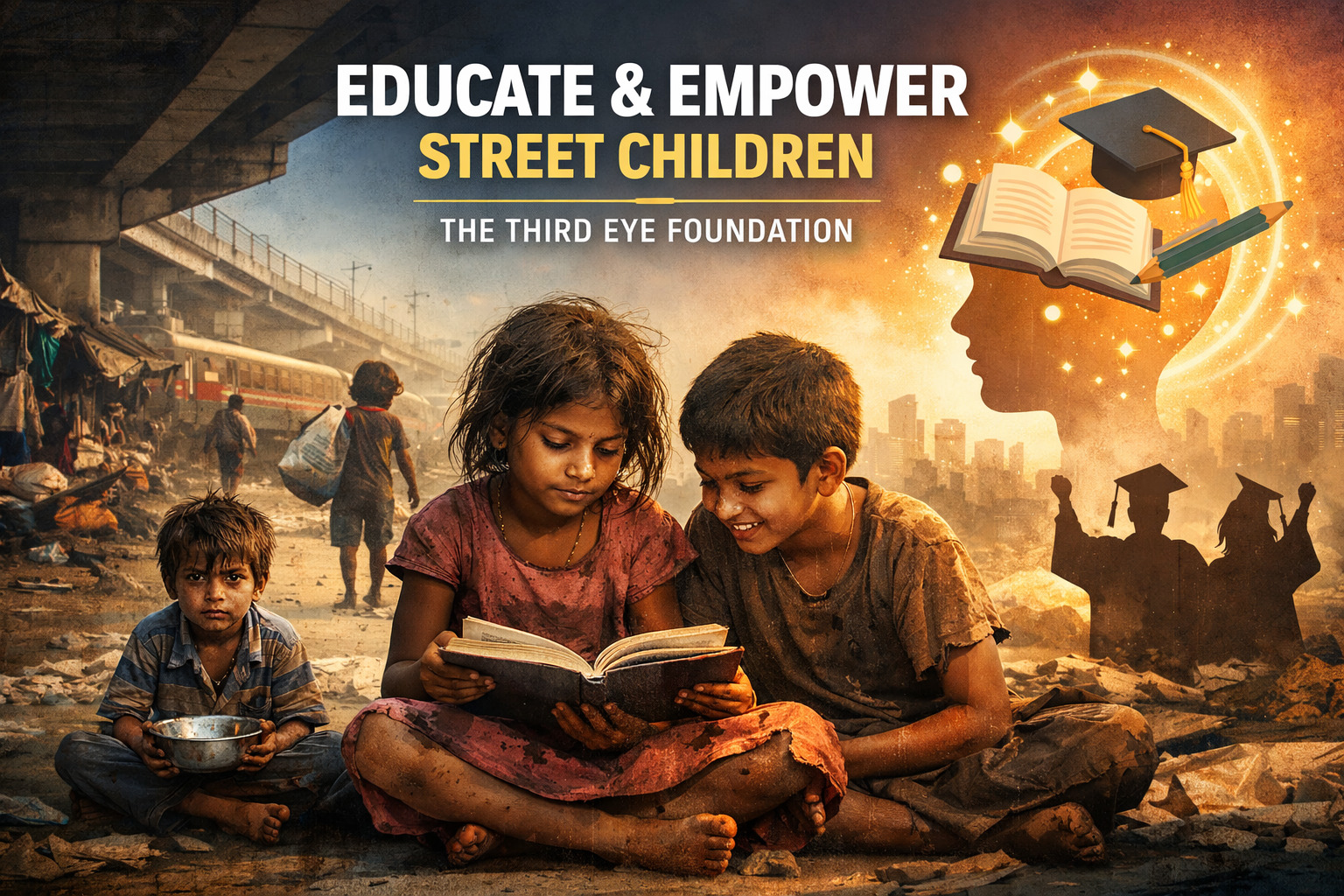

India is home to millions of street children, and this number continues to rise due to growing socio-economic challenges. Behind every child living on the streets is a story shaped by hardship - poverty, family breakdown, abuse, or the absence of support systems. These children are often forced into survival at an age when they should be learning, growing, and dreaming.
Street children can be found across urban landscapes - on crowded market roads, railway platforms, under flyovers, near bus terminals, and even around places of worship. While cities move forward with speed and ambition, these children remain invisible, navigating unsafe environments with little access to food, healthcare, or protection. Their daily reality is marked by uncertainty, vulnerability, and a lack of basic human dignity.
Who Are Street Children?
To truly understand the issue, it is important to recognise that street children are not a uniform group. They fall into different categories, each with its own challenges:
Children living on the streets with families:
These children often contribute to family income through small jobs, rag-picking, or street vending. Education is usually not a priority due to financial constraints.
Children with limited family contact:
They may occasionally connect with their families but largely survive independently or in peer groups, facing unstable living conditions and irregular income sources.
Children with no family support:
This group includes runaways, abandoned children, and orphans. They are the most vulnerable, often exposed to exploitation, abuse, and long-term neglect.
Why Do Children End Up on the Streets?
The reasons are complex and interconnected. Extreme poverty remains one of the primary drivers, pushing families to the brink where children are compelled to work or leave home. In many cases, domestic violence, substance abuse, and lack of parental care force children to run away. A significant contributing factor is the absence of accessible and quality education, which limits opportunities and traps children in a cycle of poverty.
Without intervention, these children grow up without the skills, knowledge, or support needed to lead stable lives - perpetuating generational disadvantage.
The Power of Education in Changing Lives
Education is not just a right—it is a powerful tool for transformation. For street children, access to education can mean the difference between a life of struggle and a future filled with opportunity. It provides:
However, traditional schooling systems often fail to reach these children due to documentation barriers, mobility, and financial limitations. This is where targeted NGO interventions become essential.
Our Mission at The Third Eye Foundation
At The Third Eye Foundation, we believe that every child deserves not just survival—but a chance to thrive.
Our work focuses on bringing education to the most marginalized children, especially those living on the streets. Through our initiatives, we aim to:
We go beyond textbooks - our approach nurtures confidence, dignity, and hope. By empowering children with education, we enable them to break free from cycles of poverty and build independent, meaningful futures.
A Call to Action
Street children are not invisible - they are simply overlooked. Each child carries potential waiting to be discovered and nurtured.
If we, as a society, choose to act with awareness and compassion, we can transform lives. Supporting education initiatives, volunteering, or simply spreading awareness can create lasting impact.
Join hands with The Third Eye Foundation and be part of a movement that believes every child deserves a safe childhood, a quality education, and a future full of possibilities.